MadLeaf System-based ecological management
MERF · MadLeaf Environmental Risk Framework

A model for making better decisions earlier.

MERF is the proprietary framework MadLeaf uses to read structures, habitat, water and space use and translate them into risk maps, indicators and operational priorities. It helps make more technically sound decisions before the system becomes hard to manage.

MERF Risk Map with ecological hotspots
MERF in brief Not a report, but a structure for decisions: what to do first, what to avoid, what to monitor, and where intervention makes no sense.
What is MERF

A scientific framework, not just a list of measures.

MERF (MadLeaf Environmental Risk Framework) is a predictive model developed by MadLeaf based on scientific work and field experience. It wasn't created to simply "do more", but to manage better: it observes habitat and ecosystems, breaks them down into structures, water, use and vulnerability, and tries to bring them back to a more stable equilibrium. The goal is to help the system stabilize itself by reducing today the conditions that create problems tomorrow, translating all this into risk maps, indicators and operational priorities.

Structures and habitat

MERF looks at where and how the system offers shelters, continuities, barriers or corridors: vegetation, soil, buildings, edges and transition zones.

Water and space use

Waterlogging, drainage, irrigation, shade, pathways, dwelling areas and conflicts between ecological requirements and actual use are read together.

From data to decisions

Data doesn't stay description: it becomes risk maps, indicators, priorities and decision scenarios that connect ecology, daily management and responsibility.

What MERF produces

Five outputs that actually help with decisions.

Instead of a purely descriptive document, MERF delivers a few clear outputs, designed for anyone who needs to make technical, organizational or responsibility-related decisions: from individuals to hotels, campsites, care facilities, companies and municipalities. From these outputs come measurable indicators for risk, disturbance, ecological quality and chemical use, which can be turned into KPIs and monitoring tools.

1 · Baseline
A structured starting point: where we stand today, which conditions promote risk or disturbance, which elements support the system.
2 · Potential
Seasonal potential and temporal dynamics: what can happen, in which timeframes and with which realistic developments.
3 · Risk
Risk reading for health, space use and perception, separated from mere discomfort or simple presence of an organism.
4 · Disturbance
Assessment of disturbance and impairment, including comfort, image and experience quality in gardens, facilities and public spaces.
5 · Priorities
A justified priority list: what to do first, what to monitor, what to avoid, what can be postponed and where intervention makes no sense.
Indicators, KPI, ESG

From MERF results to numbers you can actually use.

The maps, risk levels and priorities derived from MERF can be translated into quantitative indicators: development of incidents, stability of critical areas, reduction of unnecessary chemical interventions, quality and continuity of habitat. These indicators become KPIs useful for internal work and more sober decisions.

For companies, facilities, tourist establishments, care facilities or municipalities, the same data foundation can feed ESG reports, sustainability reports and certified management systems: instead of just saying "we carried out treatments", you can show how the system is changing and which decisions have improved control, comfort and ecological quality.

MERF overview with risk levels and indicators for KPI and ESG
Risk levels, seasonal potential and disturbance become measurable indicators that can be reused in technical decisions, ESG and sustainability communication.
The four phases

How MERF works in practice.

The phases follow linear logic but can be adapted to the case's complexity: from private gardens to care facilities, campsites, municipalities or companies with complex outdoor areas.

1
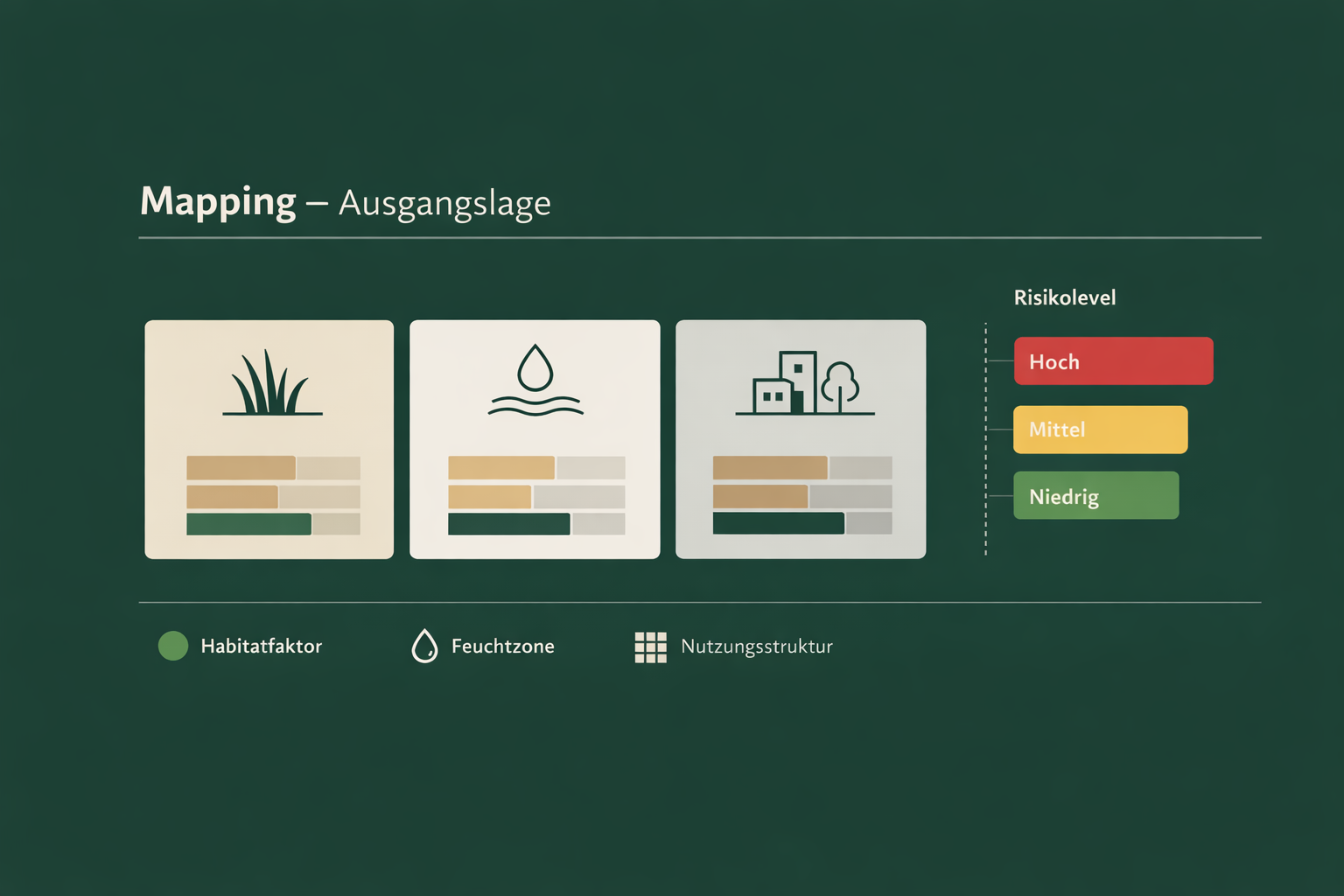
Mapping

Map the system

Data on structures, habitat, water and use are collected: microhabitats, waterlogging, pathways, dwelling areas, barriers and continuities. This creates a Risk Map that makes hotspots and stable areas visible.

2
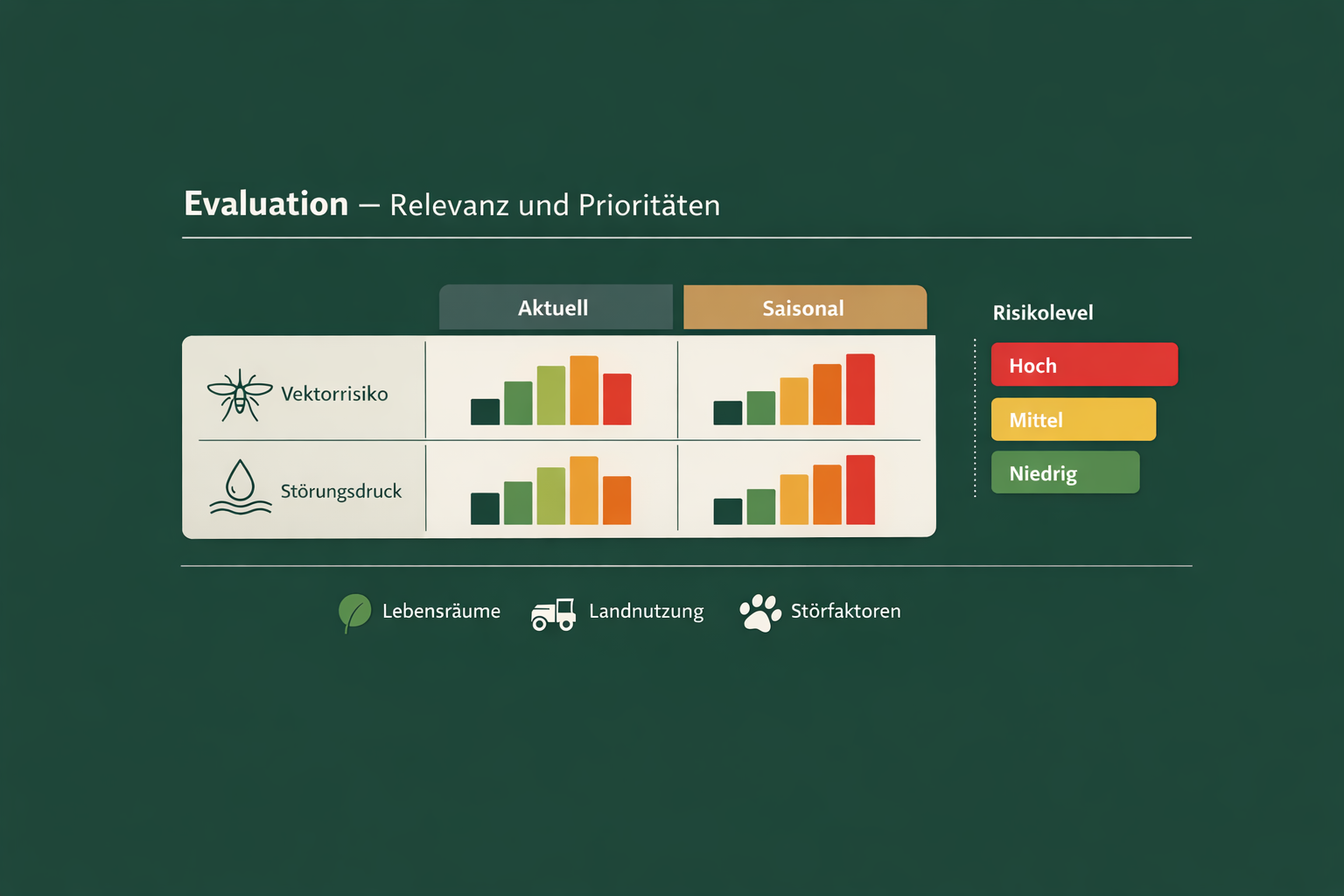
Evaluation

Assess what really matters

The observed factors are weighted and linked to each other. This clarifies which elements drive risk, where the system is fragile and which levers have the greatest effect when intervening.

3
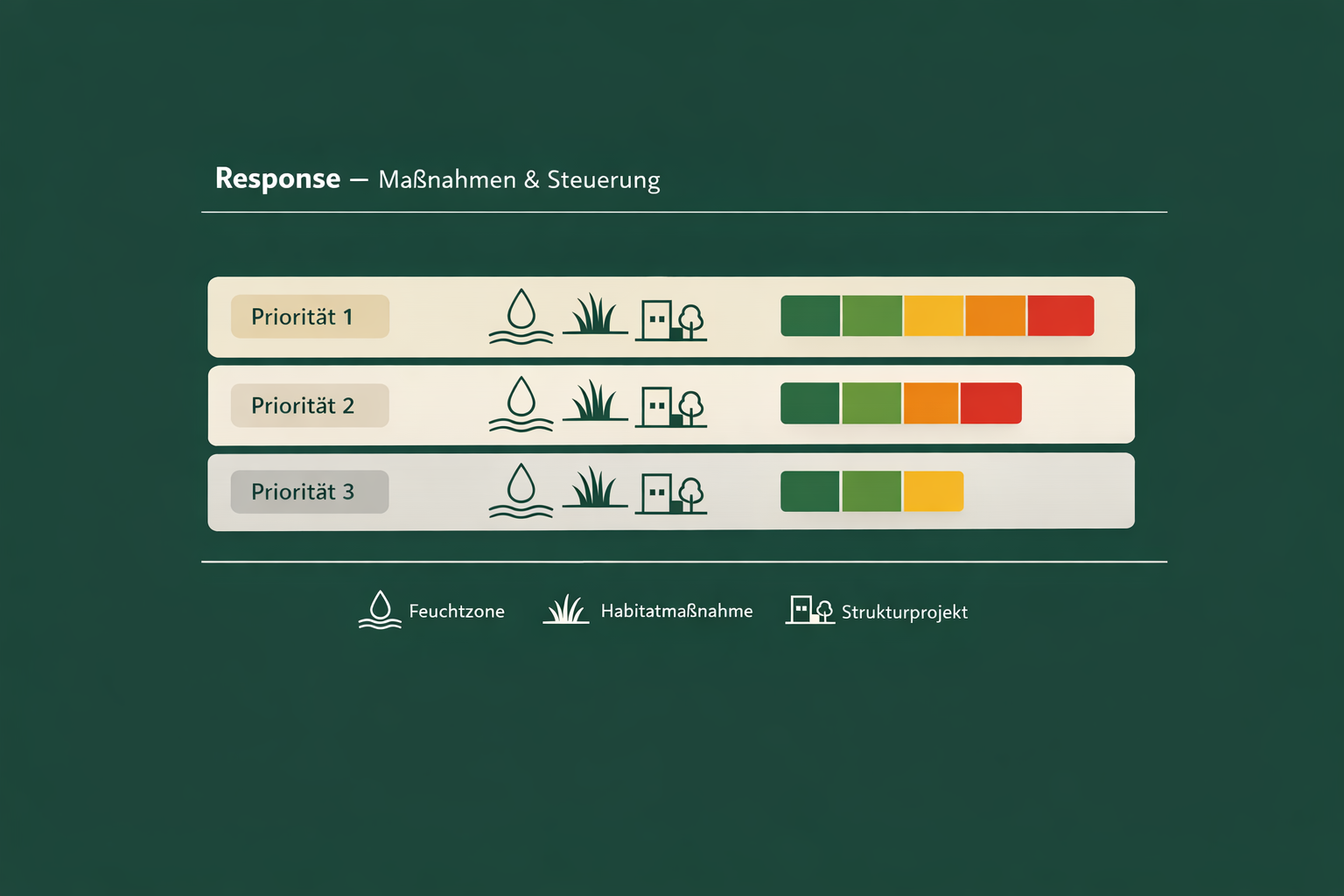
Response

Translate into measures

From the assessment come response options: management adjustments, structural changes, habitat interventions, use of biocontrol or – only when necessary – chemical measures embedded in a broader strategy.

4
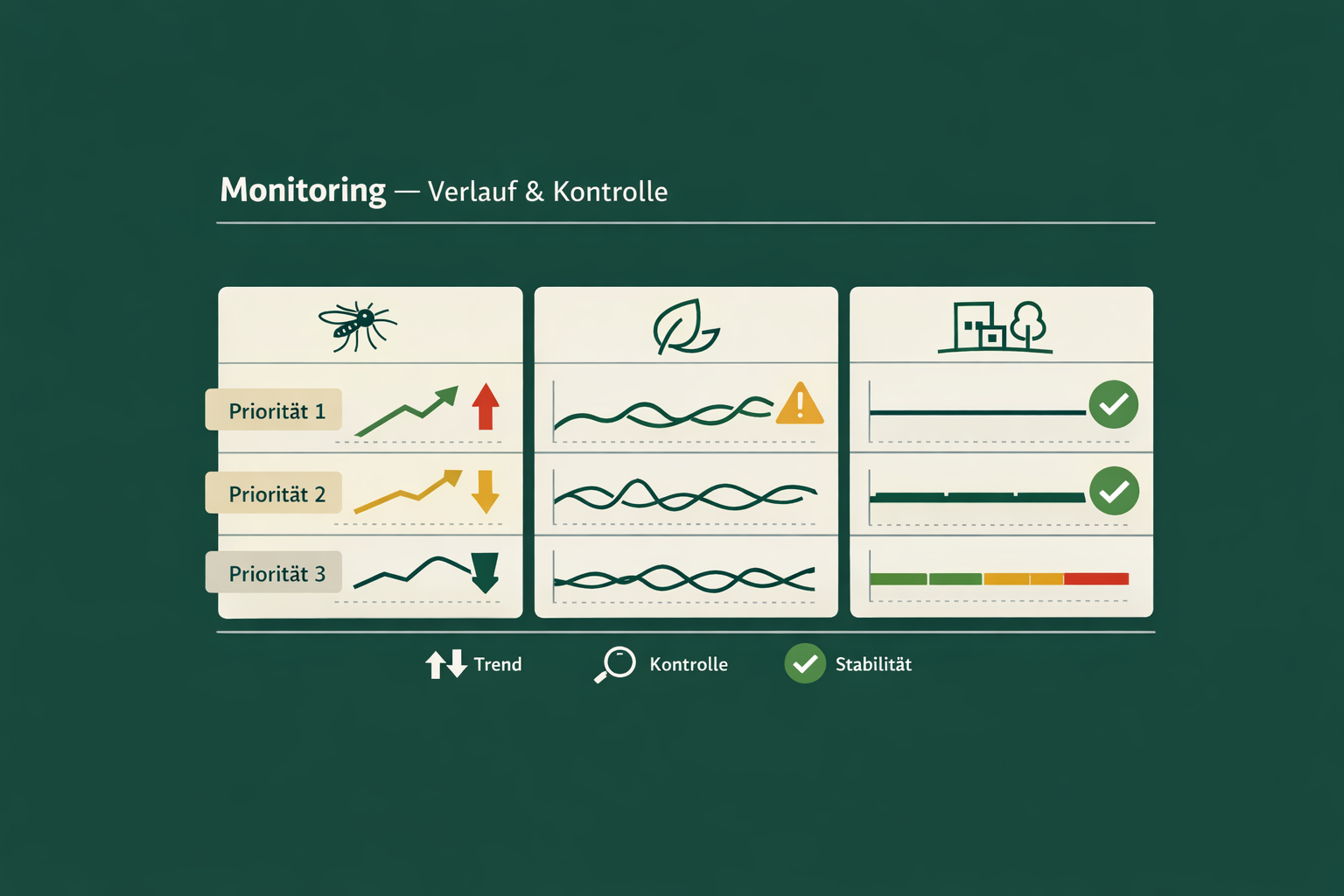
Follow-up

Build stability over time

In more complex systems, work continues with monitoring, indicators and gradual adjustments. The goal is for the system to become more predictable, less reactive and more stable year after year.

MERF Mapping phase with habitat, water and space use reading MERF Response phase with measures on habitat, water and structures MERF Follow-up phase with trends, control and stability over time
Mapping, Evaluation, Response and Follow-up form a cycle: system reading, assessment, choice of measures and effect monitoring, so each season improves the next.
MadLeaf philosophy

Manage systems, not chase symptoms.

MERF is based on a simple principle: control doesn't come from making more interventions, but from understanding the system better. That's why the focus isn't on eliminating the problem, but on reducing the conditions that make it recurrent.

Fewer emergencies.
Those who recognize signals and development lines early can intervene earlier – with more room and less urgency.
Less unnecessary chemistry.
Chemistry remains an option, but only when it's technically justified and embedded in a broader strategy, together with management, habitat measures and biocontrol.
More control and stability.
Long-term, it's about shifting from constant reaction to planning: year 1 corrections, year 2 stabilization, year 3 more robust equilibrium.
MERF analysis applied to complex spaces
Whether private garden, campsite, hotel, care facility or municipality – MERF follows the same logic: clarify the system, read the risk and make more defensible decisions.
Who MERF is for

When using MERF makes sense.

MERF isn't designed for every single event. It becomes truly useful when the problem recurs, is complex, or when responsibility, perceived quality or sustainability also play a role: hotels, campsites, care homes, schools, municipalities, companies with outdoor areas, but also individuals with gardens that "can't be read".

Tourist facilities and hospitality

Campsites, hotels, agriturismos and resorts with complex outdoor areas, where comfort, image and business continuity matter.

Sensitive facilities and municipalities

Care facilities, schools, parks, cemeteries, public pathways and sports facilities that must manage risk, disturbance and perception in a documentable way.

Private gardens, vegetable gardens and smaller operations

Gardens, vegetable gardens and agricultural realities where the problem returns every year and a deeper technical reading is needed, not just another intervention.

Want to understand if MERF makes sense for your case?

If you manage a garden, a facility, a complex outdoor area or a sensitive context and want to understand whether MERF can help you make better decisions, we can start with an initial case assessment and together determine the appropriate depth of analysis.

For a direct conversation:
Email: giuseppe.maddalena@madleaf.de
Phone / WhatsApp: +49 176 7200 2500
LinkedIn: Giuseppe Maddalena profile