MadLeaf System-based ecological management
Pilot projects & cases

MadLeaf pilot projects.

Not random trials. Technical projects that work in real-world conditions. We work with you to build a system that tests, measures and stabilizes ecological strategies in complex contexts: agricultural, residential or mixed.

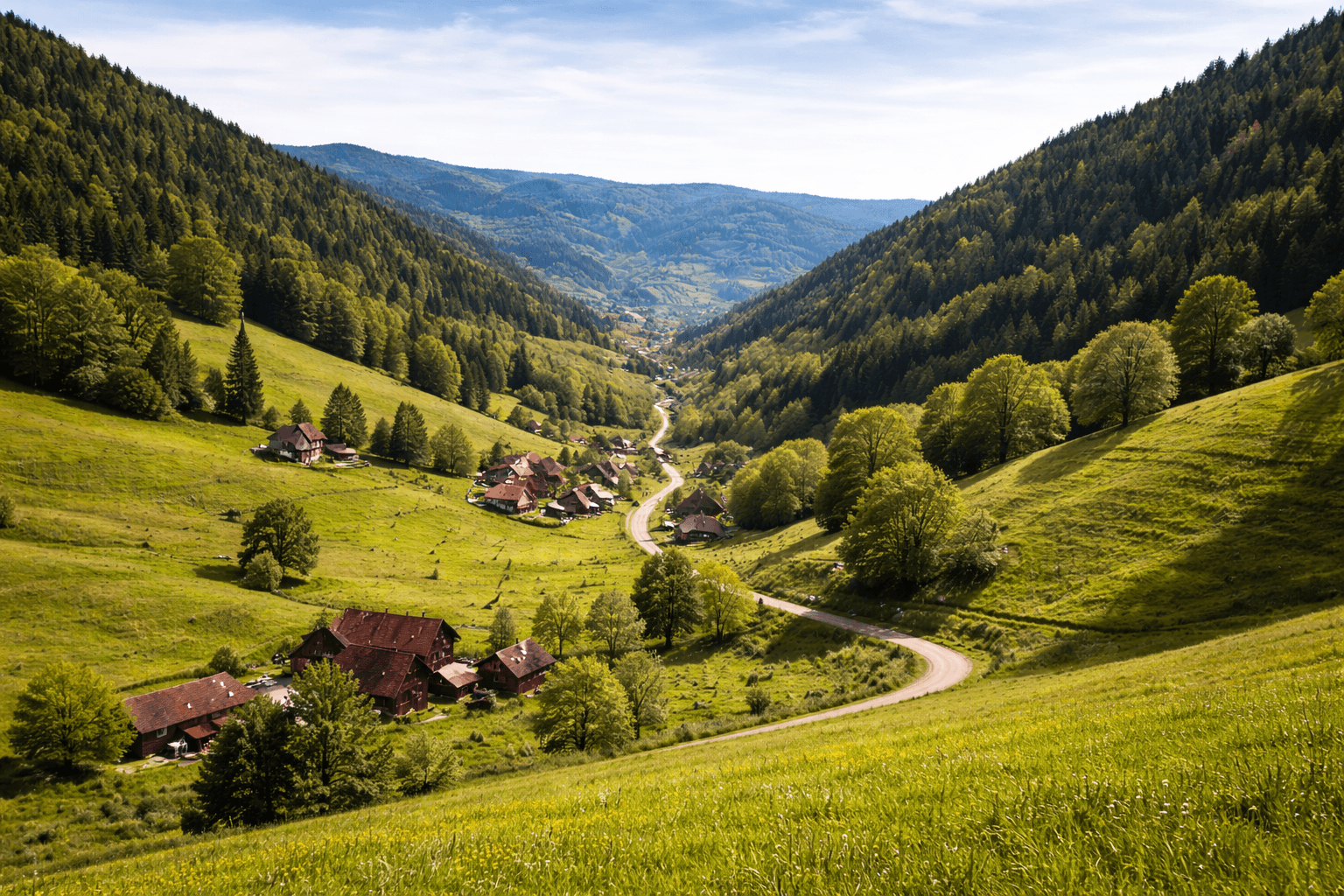
Scheme of different contexts for applying MadLeaf pilot projects
Core idea Not selling standard protocols. Designing serious projects together that leave behind a stable structure, not just another intervention.
Definition

What makes a MadLeaf pilot different from "trying a few things".

A MadLeaf pilot project starts from a clear question: why does a problem keep returning, where is the real risk, and can an IPM strategy or a combination of products and management actually work in your context, not just in theory. The difference from "trying something" is structure: a defined context, clear objectives, indicators chosen in advance, explicit limits, and an analysis that ultimately produces measurable results, not just impressions.

The result is not subjective impressions, but defensible decisions that can still be explained years later.

Structure

A MadLeaf pilot is not improvisation. It's structure.

A pilot is not imposed from above. It is built together: the people who live with the system every day bring experience, constraints and operational reality; MadLeaf brings ecological analysis, MERF, IPM and biocontrol. It's like having a field technician and a research team working on the same question — focused on your case, with the flexibility to adapt the protocol when the data requires it.

1. Initial technical assessment
We don't start with the individual pest, but with the system: environment type, space use, species involved, intervention history, constraints, sensitivities, budget and what "acceptable" means in your case.
2. Indicators that matter
A few key numbers: yields and quality in agriculture, number and intensity of incidents in residential complexes and facilities, product usage levels, presence of beneficial or problematic organisms, and perception of disturbance.
3. Written pilot protocol
A simple but precise framework: what is done, when, under which thresholds, which conditions trigger a change in strategy, and who is responsible for what. Not "let's see how it goes", but a readable sequence.
4. Final analysis and next steps
At the end, the file does not simply close: we decide what to keep, what to scale back, what should not be repeated, and under which conditions the approach can be extended to other plots or sites.
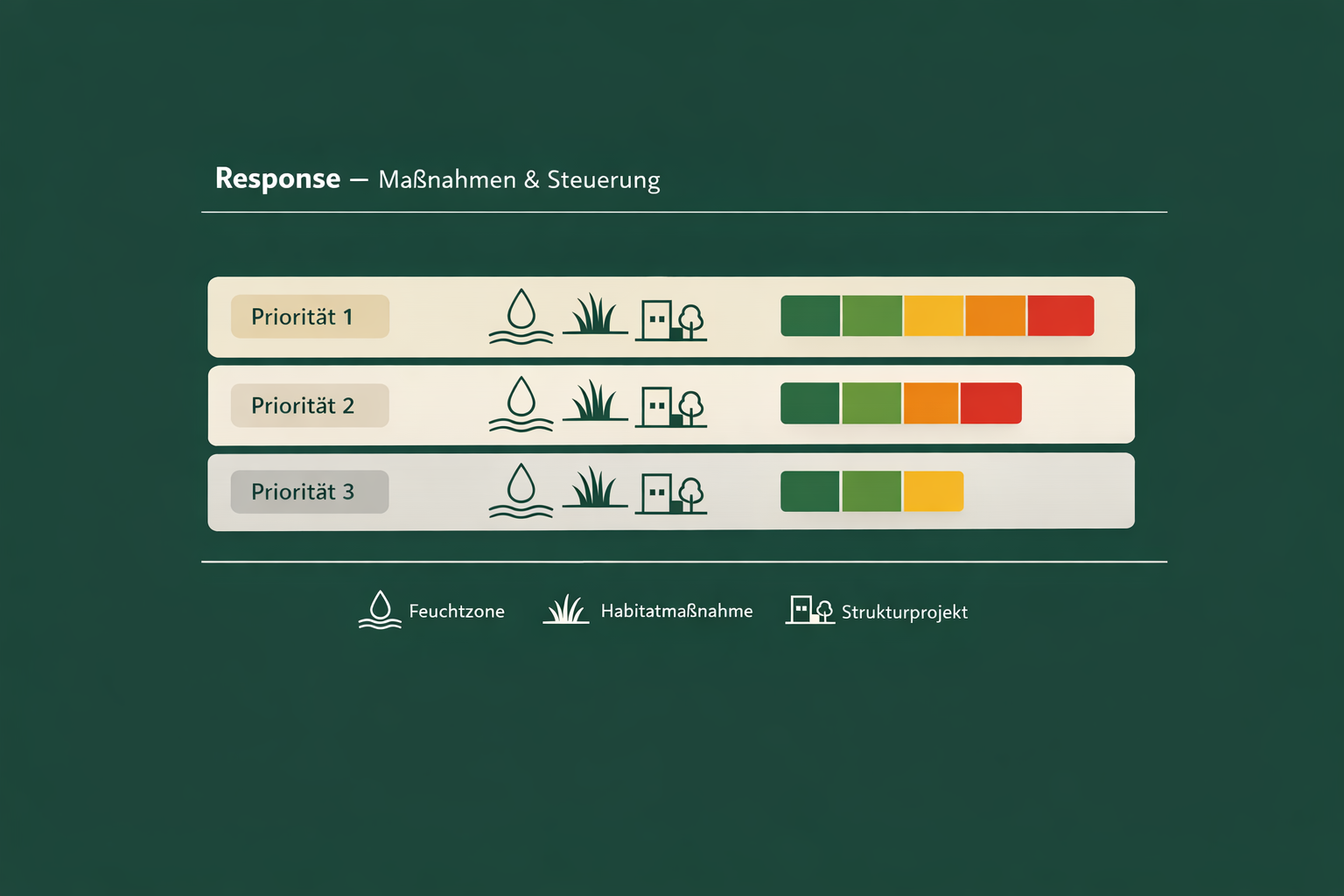
Scheme of priorities and measures in a MERF pilot project
In a MadLeaf pilot, maps, priorities and measures form a single picture: what is being tested, where, with which indicators and within which limits, so each season improves the next instead of starting from zero.
Who it's for

Where a pilot makes sense (and where it doesn't).

Not every case is suitable for a pilot project. A pilot makes sense when there is a recurring problem that does not stabilize, when you want to test an alternative strategy with sensitive products such as copper, insecticides or biocides instead of repeating standard schemes, or when you need a scientific and technical basis for decisions that go beyond "we've always done it this way".

If you are looking for a quick fix, a "disinfection just in case", or confirmation of decisions that have already been made, a pilot project is not the right tool. But if you want a structure that leaves something stable behind, rather than just another intervention, it is worth discussing.

Where it can be applied

Not just agriculture.

Orchards and vineyards, gardens and outdoor spaces with animals, residential complexes and apartment buildings, sports, recreational, educational and healthcare facilities, and other contexts where biology, perception and responsibility intersect.

What matters is not the site type, but the willingness to treat it as a system rather than a collection of scattered problems.

When it makes sense

When "common sense" is no longer enough.

When the same problem returns every year, when interventions leave no useful trace, when sensitive products are used out of habit, or when you need solid technical grounds to support non-standard decisions.

A pilot provides that foundation — with data and logic, not promises.

When it doesn't make sense

Better to be clear from the start.

If all you need is "someone to come and spray", if there is no room to adjust the system, or if decisions are already fixed and cannot be questioned, a pilot is not the right tool.

In those cases, it is more honest to say so than to dress it up as a technical project.

Examples

Some examples of possible pilots.

Every pilot is different, but these examples help clarify the kind of work involved: not "new" products to try, but technical strategies tested under real conditions, with clear indicators and clearly stated boundaries.

Agriculture: advanced IPM strategies

Orchards and vineyards with more readable management.

A pilot in an orchard or vineyard can seriously compare advanced IPM strategies, for example different combinations of more sophisticated copper formulations, biocontrol, pollinator management and system structure.

The goal is not to claim that "we use less copper overall", but to understand whether certain combinations allow more stable control of key diseases, a different profile on the plant and within the system, and more readable risk management over time.

We track crop health, yield, quality parameters, infection trends and the overall intervention balance to see whether the strategy truly holds up beyond good intentions.

Residential complexes and facilities: wasps and flies

From emergency callouts to a readable plan.

In a residential complex or publicly accessible facility, a pilot helps move from emergency callout logic to planned management of wasps and flies.

We start with surveys and maps of critical points such as nests, beams, grilles, food sources and management errors, then define prevention measures, nest management and targeted product use only where technically unavoidable, with clear communication to administrators and users.

During the pilot, we track incident numbers, seasonal patterns and user perception so the following season does not start from zero.

Ticks and processionary moth in sensitive areas

Safety and green-space management in the same map.

In areas used by both people and animals, such as paths, paddocks, parks and courtyards, a pilot on ticks and processionary moth helps bring order to the relationship between perceived risk, actual risk and green-space management.

We identify microhabitats, corridors, shade zones, waterlogging and critical trees, then test selective vegetation management, targeted work on processionary nests and minimal but focused changes to green structure and circulation paths.

The value of the pilot lies in having a framework that explains why certain areas are priorities and why certain measures were adopted or rejected.

Outdoor spaces with animals

Biological risk and livability in the same framework.

In gardens and facilities where animals are part of the system, whether private, boarding, stable or pet-friendly spaces, a pilot brings together biological risk, livability and practical space management.

We work on habitat, shelters, vegetation edges, water, indoor-outdoor transitions, movement of people and animals, and the presence of ticks, mosquitoes, flies and other parasites.

The goal is to reach a more stable situation for both people and animals, with fewer surprises, fewer interventions based on intuition alone, and a technical approach that can be carried forward in the following years.

Expectations

What a MadLeaf pilot promises (and what it doesn't).

A MadLeaf pilot offers method, clear indicators, a serious willingness to study the case and update the protocol when the data requires it, and a technical framework that keeps biology, practical management and responsibility together. It does not promise shortcuts, guaranteed outcomes under any condition, or schemes that can be copied unchanged everywhere.

A MadLeaf pilot does not remove uncertainty. It makes it manageable.

Want to understand whether a pilot project makes sense for your case?

If you manage an orchard, vineyard, garden with animals, residential complex or facility where ecological management has become complex, we can start with an initial case assessment and decide together whether a pilot is the right tool and what level of depth is appropriate.

For a direct conversation:
Email: giuseppe.maddalena@madleaf.de
Phone / WhatsApp: +49 176 7200 2500
LinkedIn: Giuseppe Maddalena profile